
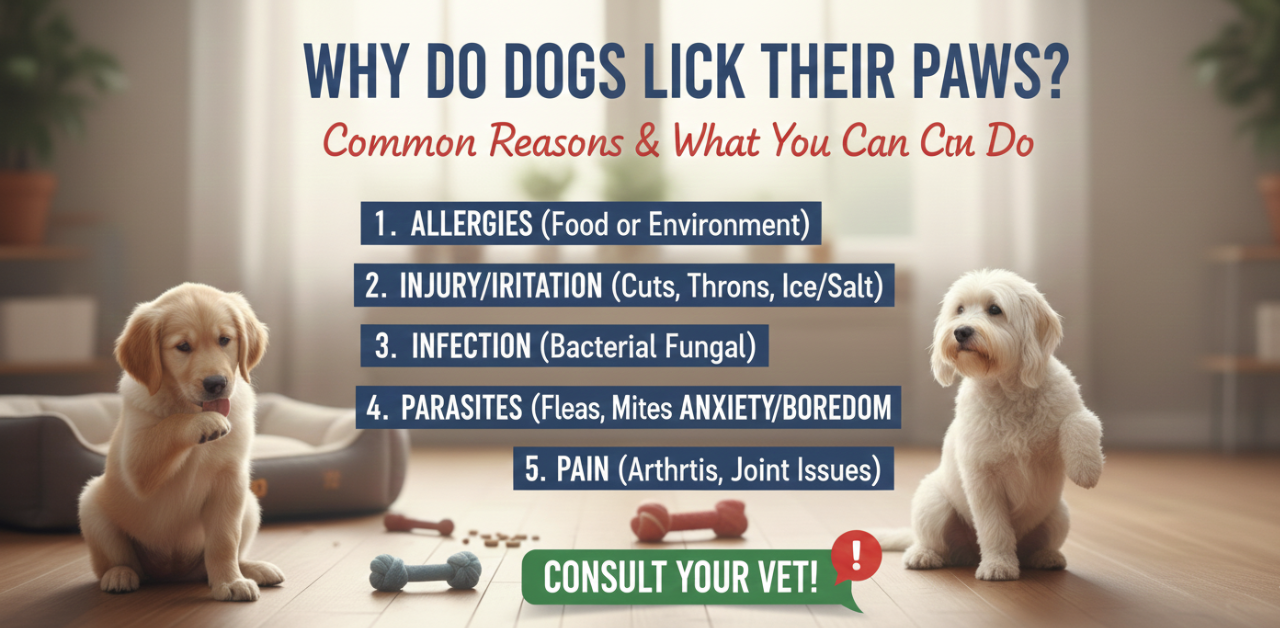
The Paw-Licking Puzzle: 7 Common Reasons Your Dog Won’t Stop
Introduction:When Grooming Becomes a Nightmare
Every dog owner knows that distinctive,rhythmic sound thwap,thwap,thwap.We often dismiss it as simple self-grooming.After all,licking their paws is a natural behavior, like a quick rinse after a messy walk.But what happens when that occasional tidying session turns into a relentless, hours-long obsession?When you notice your dog’s paws are red, swollen, or even bleeding, you’ve moved past simple grooming and into a genuine health concern.
Excessive or compulsive paw licking isn’t just annoying; it’s a distress signal. It is a symptom that demands immediate investigation, as chronic moisture from saliva quickly leads to painful secondary yeast and bacterial infections. Ignoring it means allowing a temporary itch to spiral into a severe, chronic condition. For US pet owners, understanding the root cause is critical for effective treatment. In this guide, we will decode the medical, environmental, and behavioral issues behind this perplexing problem, emphasizing the need for an accurate veterinary diagnosis to stop the cycle of licking and healing.
- Uses an emotional hook (the thwap, thwap, thwap sound).
- Differentiates between normal and excessive behavior.
- Highlights the severity (red, swollen, infection).
- Emphasizes the solution (accurate diagnosis).
- Sets the stage for a comprehensive, expert-level guide.
Clinical & Biological Triggers:Identifying When Veterinary Consultation is Necessary

When paw licking becomes excessive, non-stop, or occurs primarily at night, the reason is often a hidden medical problem.These are the three most common causes that veterinary professionals observe
The Dominant Culprit: Allergies (Allergic Dermatitis)
Allergies are the number one medical cause of paw licking, and they are very common in the US.When a dog comes into contact with an allergen, they try to alleviate the itch(khujli) by licking or chewing their paws.
Environmental/Seasonal Allergies (Atopic Dermatitis): This is the most common type. Pollen, grass, dust mites, and mold spores are absorbed directly through the paws from the ground. This can occur year-round or worsen with seasonal changes.
Food Allergies: Although less common, these can also cause paw licking.They are often triggered by common protein sources (like chicken, beef, or dairy) and tend to be present for long periods.
The Secondary Problem: Yeast and Bacterial Infections
This is not necessarily the initial cause, but it is the immediate result of excessivelicking.When the dog licks its paws, it traps moisture and saliva there, which creates a perfect warm,wet environment where Yeast(Malassezia) and bacteria thrive rapidly.
| Symptom (Look for These!) | The Cause | EEAT Detail |
| “Frito Feet” Smell | Yeast Infection | A slight corn chip or cheesy smell coming from the dog’s paws is a sign that there has been an overgrowth of yeast called Malassezia. |
| Reddish-Brown Staining | Saliva Reaction | In dogs with light-colored fur, the compound called porphyrin in the saliva oxidizes due to licking, turning the fur a rust-red color. |
| Visible Swelling | Bacterial Infection | When the skin breaks due to licking, bacteria can enter, causing the skin between the paw pads and toes to become red, hot, and swollen. |
Pain and Injury (A Hidden Limp)
Sometimes, a dog will repeatedly lick only one paw.When this happens, you should suspect the cause is pain.Licking, in this instance, is a self-medicating behavior through which they attempt to soothe the painful area.
Foreign Bodies: A small seed, burr, or splinter may be lodged between the paw pads or toes. This causes intense pain.
Bare aur umar rasida (senior) dogs aksar arthritis ki wajah se takleef ka shikar hote hain. Agar wo apne panjo ya takhno (carpals aur tarsals) ko bar bar chaat (lick) rahe hain, to ye darasal unka us dard ko kam karne ya sukoon pane ka ek tariqa ho sakta hai.
A Broken Nail or Cut:A small cut on the paw pads or a cracked nail can also cause intense licking until the area heals.
Behavioral and Emotional Causes (The Vicious Cycle)

When doctors rule out physical and medical reasons, the cause of paw licking may lie in the dog’s emotional or psychological well-being.At this stage,licking transitions from a simple habit to a compulsion.
Boredom and Lack of Stimulation
Dogs that spend long periods alone or do not receive enough mental enrichment often redirect their attention to their own bodies (self-soothing).
Boredom-Induced Licking: Paw licking becomes a form of displacement activity for them. It is an easy, repetitive action that provides them with temporary focus.
The Solution: Environmental Enrichment: To break this cycle, you must engage their minds.
| Activity Type | Example for Paw Lickers |
| Puzzle Feeders | Giving a KONG Toy filled and frozen with peanut butter or yogurt. |
| Scent Work | Hiding treats around the house and asking them to sniff them out. |
| Chew Alternatives | Providing long-lasting chews (like bully sticks) so their focus shifts from licking to chewing. |
Anxiety and Stress (Self-Soothing Mechanism)
Stress, Separation Anxiety, or changes in the environment (such as moving to a new house, a new pet, or very loud noises) can make a dog nervous.Licking becomes a self-soothing technique for them.
Endorphin Release: Licking causes endorphins (feel-good chemicals) to be released in the dog’s brain, which temporarily reduce stress and pain.
The Danger: If the anxiety persists, this self-soothing behavior can evolve into an Obsessive-Compulsive Disorder (OCD).
The Chronic Condition: Acral Lick Granuloma (Lick Granuloma)
This is the condition where licking becomes so intense and chronic that the skin develops a thickened, ulcerated, and nodular (lump-like) wound, especially on the front legs.
Vicious Cycle Reinforcement: At this stage, the initial cause (whether it was allergy or pain) is no longer necessary.The dog’s brain wiring has been altered. The Lick Granuloma itself becomes an addictive behavior.
Treatment: Lick Granuloma is very difficult to treat and often requires a combination of behavioral modification, anti-anxiety medicine, and topical steroids.
When to Stop Guessing: The Vet’s Diagnostic Approach
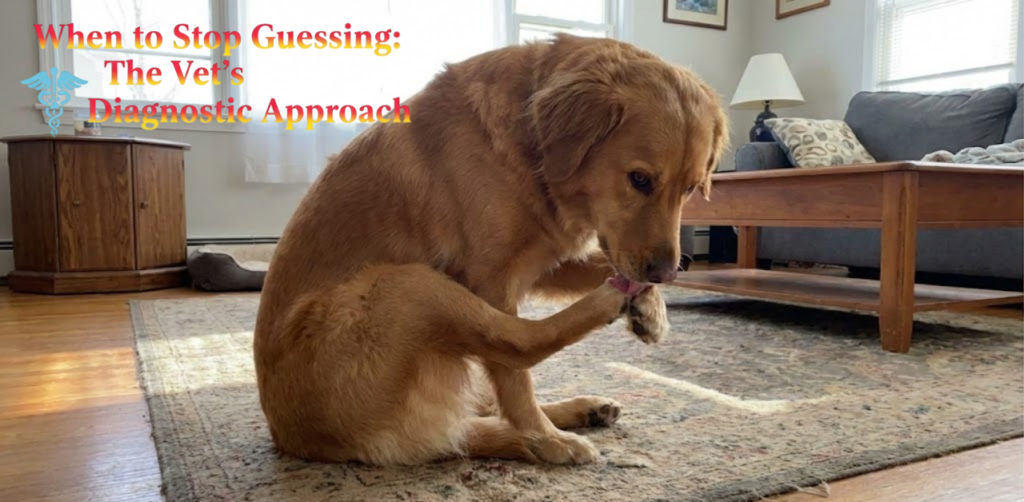
Uncovering the true cause of paw licking is often like detective work. A common mistake is only looking at the surface. To give your dog permanent relief, your veterinarian must follow these systematic steps:
The Owner’s Role: Keeping a Licking Log
Before visiting the vet, prepare this crucial data:
When It Started: When did the licking begin?
Severity: How long and how intensely does the dog lick?
Triggers: Does it increase at specific times (like at night, or after a walk)?
Diet Changes: Has any new food or treat been introduced in the last 3-6 months?
The Veterinary Diagnostic Process (Expertise)
A vet doesn’t just guess by looking. They perform necessary tests to ensure the treatment is correct:
Physical Exam: Checking the paw pads, areas between the toes, and nails for injury, foreign bodies, or swelling.
Paw Cytology: This is the easiest and most essential test. The doctor takes a light scraping or swab from the paw and examines it under a slide.This immediately reveals whether there is a Yeast infection, Bacteria, or only Inflammatory cells (which suggest allergies).
Deep Skin Scraping: To rule out parasitic causes like mange or mites.
Allergy Testing: If infections are recurrent, blood tests or skin tests help identify environmental allergens.
Solutions and Treatment Categories
The Treatment (Ilaaj) always depends on the root cause:
A. At-Home & Management Solutions (Owner Experience)
| Problem | Actionable At-Home Solution |
| Pollen/Dirt | Clean paws after every walk with hypoallergenic dog wipes or a dilute Epsom salt soak. |
| Boredom/Anxiety | Incorporate daily mental enrichment and structured exercise (as discussed in Section 3). |
| Compulsive Licking | Use an E-collar (cone) or protective dog boots until the infection heals to allow skin recovery. |
| Dryness | Use vet-approved paw balm or coconut oil. |
Veterinary Treatments (Professional Intervention)
Infection Control: If cytology reveals bacteria or yeast, the vet will prescribe topical anti-fungal/antibacterial washes or oral medications.
Allergy Management: Depending on severity, this may include:
- Specialized Diet: A novel protein or hydrolyzed protein diet for food allergies.
- Medication: Immunosuppressants or anti-itch drugs.
Pain Management: NSAIDs (Non-Steroidal Anti-Inflammatory Drugs) to reduce pain caused by arthritis or hidden injuries.
Conclusion: Stopping the Lick, Starting the Healing

Paw licking is rarely just a “bad habit.” As we’ve explored, it is a complex symptom pointing toward an underlying issue—be it a severe allergy, a hidden injury, chronic anxiety, or an ingrained behavioral compulsion like Lick Granuloma.
The key takeaway for every US dog owner is this: Licking is a signal, not the problem itself. You cannot solve the issue by simply stopping the licking; you must identify and treat the root cause.
Your Next Steps for Trustworthy Care:
Be a Good Observer: Start maintaining a Licking Log (date, time, location, and severity) and note any smells or discoloration. This data is invaluable for your vet.
Seek Professional Diagnosis: Avoid guesswork and home remedies for prolonged licking. Consult your veterinarian for a crucial Paw Cytology test to accurately determine if yeast, bacteria, or just inflammation is present.
Commit to the Plan: Whether the solution involves specialized diet, anti-anxiety training, or medication, consistency is key to breaking the itchy, painful, and compulsive cycle.