
Editor’s Note: This guide on the best food for large breed dogs has been meticulously researched and updated by me, Muhammad Sajid, for 2026. Having worked closely with various breeds, I understand that large dogs have slower metabolisms and are prone to joint issues. I have personally vetted these food recommendations to ensure they provide the precise balance of nutrients required for skeletal health and longevity. My goal is to help you make an informed choice that keeps your large companion healthy, active, and happy throughout their life.
Introduction: Understanding the Scale of Large Breed Nutrition
Selecting the best food for large breed dogs is a critical decision that directly impacts their skeletal development and long-term joint health. As a pet care specialist, I have observed that larger breeds have unique metabolic needs and are more prone to issues like hip dysplasia if fed an incorrect diet. Unlike standard pet kibble, premium large breed nutrition must provide a precise balance of calcium and phosphorus to prevent rapid, unhealthy growth spurts.
By prioritizing high-quality dog kibble rich in omega fatty acids and glucosamine, you can ensure optimal joint support for your heavy-bodied companion. In this guide, I will share veterinarian-recommended dog food options that I have personally vetted for safety and nutritional excellence.
The Biological Blueprint: Why Large Dogs Require Specialized Fuel
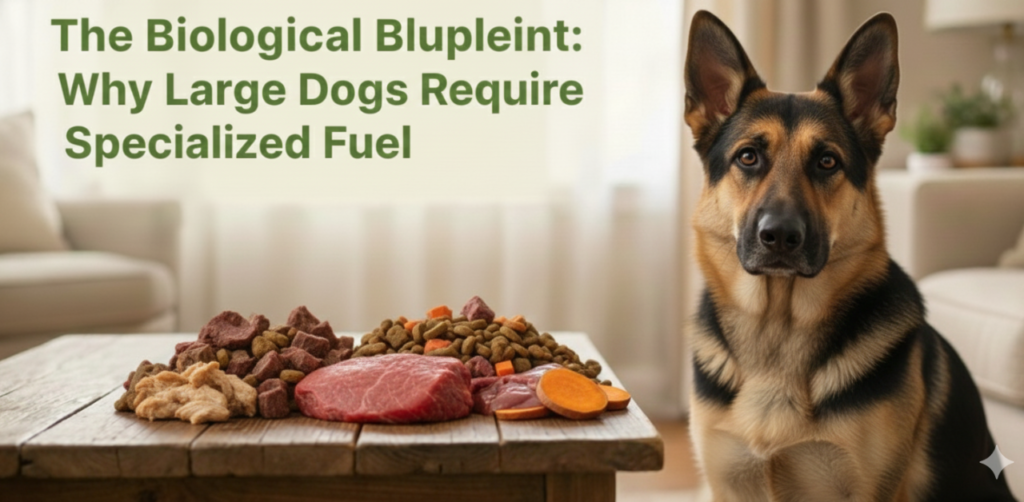
Large breed food is essential because big dogs grow much slower than small ones. While tiny breeds mature in months, giant breeds like Mastiffs develop their skeletal structure for up to two years. Feeding them generic food high in calcium can cause “rapid growth,” the primary cause of Developmental Orthopedic Disease (DOD). When bones grow faster than muscles, it leads to permanent issues like hip or elbow dysplasia. Therefore, the best dry dog food for large dogs follows a “slow-growth” philosophy. This ensures your dog reaches its full size safely over time, rather than hitting maximum weight prematurely and risking long-term joint damage.
The Calcium and Phosphorus Balance
In the world of recommended large breed dog food, the ratio of calcium to phosphorus is perhaps the most critical metric.For a large breed puppy, having too much calcium in the diet is just as dangerous as having too little.Unlike adult dogs, puppies cannot regulate how much calcium they absorb from their gut; they absorb nearly everything they eat.If the calcium levels are too high, it leads to bone spurs, joint deformities, and metabolic bone disease.High quality American brands like Purina, Hill’s, and Blue Buffalo invest millions of dollars into ensuring that their large breed formulas maintain a precise calcium level typically between 1.2% and 1.5% to facilitate healthy, controlled bone density development.
Top-Rated Product
One of the most recommended large breed dog food options by American veterinarians is the Purina Pro Plan Specialized formula.This product has gained a massive following because it addresses two of the most common issues in large breeds: digestive sensitivity and coat health.Large dogs, particularly Labradors and German Shepherds, are prone to “hot spots” and skin allergies.By using real salmon as the primary protein source instead of beef or chicken (which are more common allergens), Purina provides a nutrient-dense meal that is easy on the stomach.Furthermore, the inclusion of live probiotics a hallmark of modern canine nutrition ensures that the gut microbiome remains balanced. This is crucial for large dogs, as their longer digestive tracts can often lead to fermentation and gas issues if the food is not processed efficiently.
Blue Buffalo Life Protection Formula: The Natural Choice
What makes this brand stand out in the competitive US market is their proprietary “LifeSource Bits.”These are dark-colored kibble pieces mixed into the bag that are cold formed to preserve the potency of vitamins, minerals, and antioxidants.In large dogs, oxidative stress can lead to early aging and immune system decline.By including ingredients like blueberries, cranberries, and turmeric,Blue Buffalo provides a defense mechanism against free radicals. Moreover, their large breed adult formula is enriched withCarnitine, an amino acid that helps the body metabolize fat into energy, which is vital for preventing obesity in breeds like the Golden Retriever, who are notorious for gaining weight easily.
Critical Health Conditions Managed by Diet

| Condition | Dietary Requirement | Recommended Ingredient |
| Hip Dysplasia | Cartilage Support | Glucosamine & Chondroitin |
| Bloat (GDV) | Digestibility | Prebiotic Fiber & Low Fat |
| Heart Disease | Muscle Function | Taurine & L-Carnitine |
| Obesity | Calorie Control | High Fiber, Low Fat |
| Dull Coat | Skin Barrier | Omega-3 & Omega-6 Fatty Acids |
The Silent Threat: Gastric Dilatation-Volvulus (Bloat)
When searching for the best dry dog food for large dogs, one must consider the physical shape of the dog.Deep-chested breeds like Great Danes, Boxers, and Weimaraners are at a high risk for Bloat (GDV), a condition where the stomach fills with air and twists.While the cause of bloat is multi faceted, diet plays a huge role.Research suggests that foods with very high fat content or those that rely heavily on citric acid as a preservative (when moistened) might increase the risk.Modern large dog breed food is designed with larger, harder kibble.This isn’t just a gimmick it forces the dog to chew their food thoroughly, which slows down the eating process and prevents the ingestion of excess air.Additionally, high-quality brands ensure that their fiber sources (like beet pulp or miscanthus grass) promote steady gastric emptying, so food doesn’t sit and ferment in the stomach for too long.
The Foundation of Choice
As we have explored in this first section, the journey to finding the best dog food for large breeds begins with a scientific understanding of their growth and skeletal needs.Whether you are looking for a budget friendly option or a premium natural diet, the first three ingredients on the label and the AAFCO statement of “Growth” or “Maintenance” are your most important tools.
The Architecture of Protein: Sourcing and Bioavailability

When searching for the best large breed dog food, the word “protein” is often used as a marketing buzzword, but for the discerning American consumer, the source and quality of that protein are what truly matter.In large breed dogs, protein is the building block for lean muscle mass, which acts as a structural support system for their heavy bones.Without sufficient high-quality protein, a large dog’s muscles will atrophy, placing the entire weight of the animal directly onto its joints, accelerating the onset of arthritis.
Whole Meats vs. Meat Meals
In the US market, labels usually list “Whole Chicken” or “Chicken Meal.It is a common misconception that “meal” is an inferior ingredient.In reality, a meat meal is a concentrated protein source where the water has been removed. Because large dogs require significant amounts of protein but should not consume excessive water-weight in their kibble, a combination of whole meat for amino acid diversity and meat meal for protein density is often the hallmark of a recommended large breed dog food.However, owners should avoid any product that lists “Animal By-Product” or “Meat Meal” without specifying the animal (e.g., “Poultry Meal” is less desirable than “Chicken Meal”).
Amino Acid Profiles: The Role of Taurine
Recent veterinary discussions in the USA have highlighted the importance of specific amino acids like Taurine in large dog breed food.While dogs can technically synthesize Taurine from other amino acids like Methionine and Cysteine, many giant breeds, such as Newfoundlands and Dobermans, have shown a predisposition to Dilated Cardiomyopathy (DCM) if their diet is deficient.The best dog food for large breeds now proactively includes supplemental Taurine to ensure heart muscle elasticity and long-term cardiovascular health.
The Great Grain Debate: cientific Reality vs. Marketing Trends
For nearly a decade, the “Grain-Free” trend dominated the US pet food industry. However, evergreen advice for large breed owners has shifted back toward “Wholesome Grains.”Unless a dog has a medically diagnosed allergy to grains (which is statistically rare, as most allergies are to proteins like beef or dairy), grains like brown rice, oatmeal, and barley provide essential nutrients that grain-free alternatives like peas and lentils sometimes lack.
The Fiber Benefit for Large Breeds
The best dry dog food for large dogs often utilizes grains because of their fiber content. Large breeds have a physically longer digestive tract than small dogs. Food takes a longer time to pass through, which can sometimes lead to poor stool quality.The soluble and insoluble fibers found in oats and barley help regulate this transit time.This “internal scrubbing” ensures that the colon stays healthy and that the dog feels satiated without needing to consume excess calories that lead to obesity.
The DCM Investigation
The FDA’s investigation into the link between grain-free diets (high in legumes and potatoes) and heart disease has made many American owners cautious. Consequently, the most recommended large breed dog food formulas in 2025 are those that celebrate “Healthy Grains.”Brands like ACANA Wholesome Grains and Purina Pro Plan have led the way in showing that grains are not “fillers” but are actually complex carbohydrates that provide steady, slow-release energy for a large dog’s day-to-day activities.
The Senior Shift: Managing the Golden Years
As a large breed dog crosses the threshold of six or seven years, their metabolic needs undergo a radical transformation.This is the stage where the best large breed dog food transitions from a “growth and maintenance” focus to a “preservation” focus.Senior large dogs move less, meaning their caloric intake must decrease to prevent weight gain, but their need for high-quality, easily digestible protein actually increases to prevent muscle wasting (Sarcopenia).
Cognitive Support and Antioxidants

Aging large dogs can suffer from Canine Cognitive Dysfunction (CCD), similar to dementia in humans.The best dog food for large breeds in the senior category is often fortified with Medium Chain Triglycerides (MCTs), usually derived from botanical oils.These MCTs provide an alternative energy source for the aging brain.Coupled with high levels of Vitamin E and C, these diets help maintain mental sharpness and vision, ensuring that your dog remains engaged with the family in their later years.
Kidney Health and Phosphorus Levels

In senior large dogs, kidney function can begin to decline. While protein is necessary for muscles, excessive phosphorus can put a strain on the kidneys. Senior-specific large dog breed food is carefully balanced to provide”high-quality,low-quantity” minerals.By using premium protein sources that are naturally lower in phosphorus,these foods help maintain renal health while keeping the dog’s coat shiny and their energy levels stable.
Summary Table: Ingredient Red Flags vs. Gold Standards
| Ingredient Category | Avoid These (Red Flags) | Look For These (Gold Standards) |
| Protein Sourcing | Unnamed “Meat Meal”, By-products | Real Chicken, Salmon, Lamb Meal |
| Carbohydrates | Corn Syrup, Excessive Soy, Dyes | Oatmeal, Brown Rice, Quinoa |
| Fats & Oils | Tallow, Lard, Vegetable Oil | Salmon Oil, Chicken Fat, Flaxseed |
| Preservatives | BHA, BHT, Ethoxyquin | Mixed Tocopherols (Vitamin E), Rosemary |
| Joint Support | “Trace amounts” of Glucosamine | 600mg+ of Glucosamine/Chondroitin |
Transitioning and Feeding Logistics in the USA
In the United States, many owners live in multi-pet households, which makes feeding a large breed challenging. It is vital to recognize that the best dry dog food for large dogs is only effective if fed correctly. Because of the risk of bloat, American veterinarians often recommend using “Slow Feeder” bowls or “Snuffle Mats” for large breeds. These tools turn mealtime into a mental game, preventing the rapid “wolfing down” of food that leads to air ingestion.
Furthermore, when transitioning to a new recommended large breed dog food, the “7-Day Rule” is non-negotiable.Large dogs have a massive volume of gut bacteria; changing their diet overnight can cause a “bacterial bloom” that results in severe diarrhea and dehydration.By slowly mixing the new food with the old, you allow the digestive enzymes to adapt, ensuring a smooth transition to the new nutritional profile.
Conclusion: The Long-Term Investment in Your Dog’s Health
Choosing the best large breed dog food is more than just a daily chore; it is a foundational investment in the longevity and happiness of your companion. Throughout this guide, we have explored the intricate balance required to fuel a large-framed animal.From the critical importance of a controlled calcium-to-phosphorus ratio during the puppy growth phase to the necessity of glucosamine and taurine for aging joints and hearts, it is clear that large breeds require a scientific approach to nutrition.
In the United States, we are fortunate to have access to some of the most advanced veterinary diets in the world.Whether you choose the clinical precision of Purina Pro Plan, the natural holistic approach of Blue Buffalo, or the life-stage expertise of Hill’s Science Diet, your primary goal remains the same: preventing the common pitfalls of large breed ownership.By avoiding empty fillers, managing caloric intake to prevent obesity, and choosing high-quality proteins, you are actively protecting your dog from the risks of hip dysplasia, heart disease, and digestive distress
“For more expert advice on pet care and to learn about our journey, feel free to visit my [About the Author] page.”