
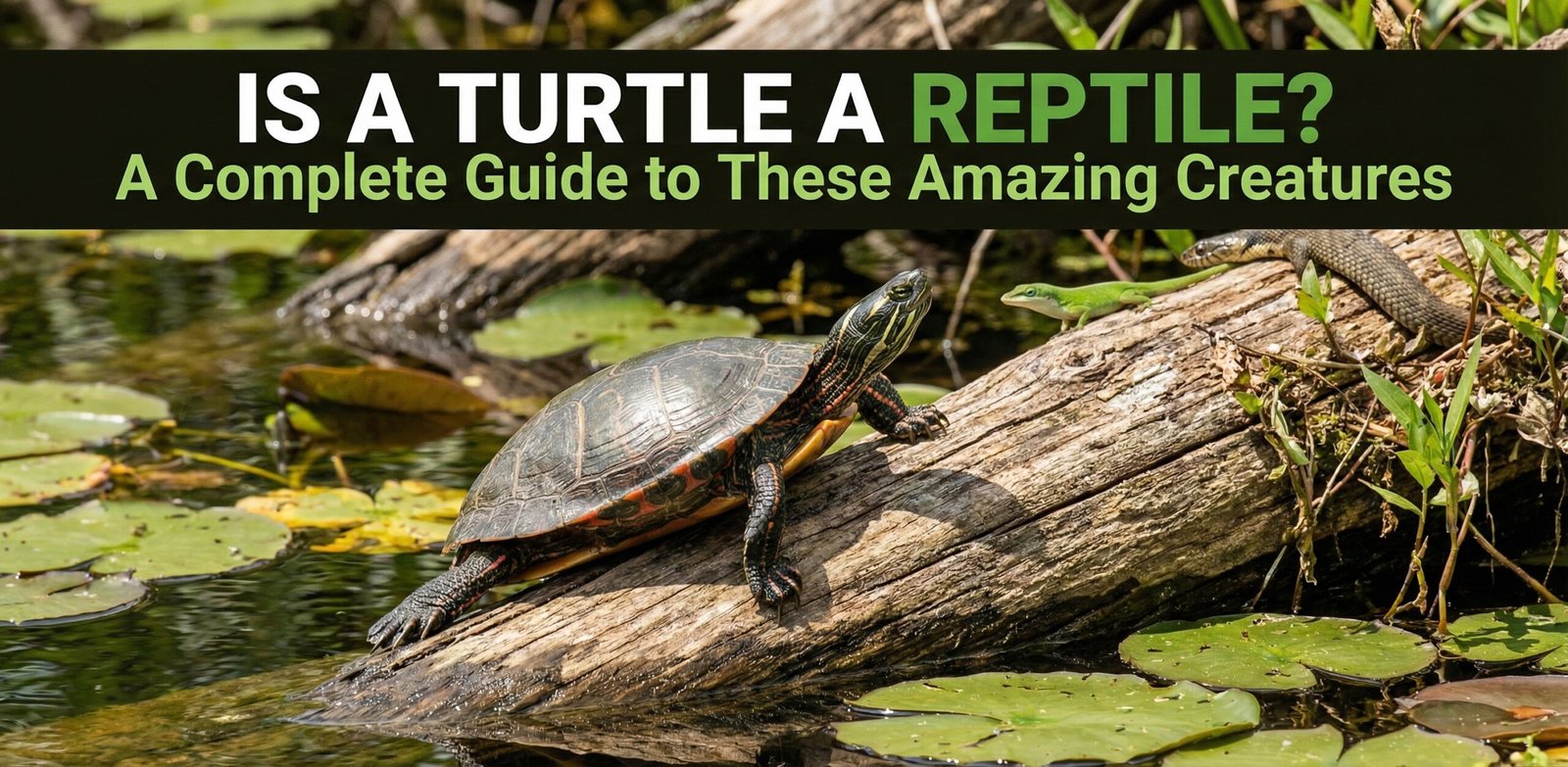
Have you ever visited a pond and seen a small, green head poking out of the water? Or maybe you have seen a giant tortoise munching on grass at the zoo. When we see these animals, we often ask ourselves one very important question: Is a turtle a reptile? The short answer is yes! Every turtle, whether it lives in the deep blue ocean or in a dry desert, is a member of the reptile family. In the world of Herpetology (the special branch of science that studies reptiles and amphibians), turtles are some of the most fascinating creatures on Earth.
In this article, we are going to dive deep into the world of turtles. We will learn why they are reptiles, how their bodies work, and what makes them different from their “cousins,” the amphibians.
What Exactly is a Reptile?

To understand why a turtle is a reptile, we first need to know what a reptile actually is. Scientists put animals into groups so they are easier to study. Reptiles are a group of animals that share specific “rules” or traits.
1. They are Cold,Blooded (Ectothermic)
Turtles are cold blooded,which is also called being ectothermic.This doesn’t mean their blood is always cold like ice!It means that they cannot make their own body heat inside their bodies like humans do.
If a turtle is cold, it has to crawl onto a sunny rock to warm up. If it is too hot, it has to go into the water or find some shade. Their energy comes from the sun!
2. They Have Scaly Skin
Unlike us,who have soft skin and hair,reptiles have tough,waterproof skin covered in scales.On a turtle,these scales are often called scutes.These scales protect them from getting hurt and help keep water inside their bodies so they don’t dry out.
3. They are Amniotes
Turtles are classified as an amniote. This is a big word, but it just means that they lay eggs that have a special protective shell. Because they are an amniote, turtles can lay their eggs on land. Even sea turtles, who spend their whole lives in the ocean, must come to the beach to bury their eggs in the sand.
The Science Name: Meet the Testudines and Chelonians

Scientists like to use “fancy” names to be very specific. When experts talk about the whole group of turtles, tortoises, and terrapins, they use the word Testudines.
Sometimes, you might also hear the word Chelonians. Both of these words basically refer to the same family tree. Whether it is a tiny pond turtle or a massive Leatherback sea turtle, they are all part of this ancient group that has lived on Earth for over 200 million years! That means turtles were around when the Dinosaurs were walking the Earth.
Turtle vs. Amphibian: Why the Confusion?
A lot of people think turtles are amphibians because they spend so much time in the water. Frogs, toads, and salamanders are amphibians. While turtles and frogs might share the same pond, they are very different!
Why a Turtle is NOT an Amphibian:
- The Skin: Amphibians have slimy, porous skin that can absorb water. Turtles have dry, scaly skin.
- The Breath: Most amphibians can breathe through their skin or use gills when they are young. Turtles have lungs from the day they are born and must breathe air, just like you!
- The Eggs: Amphibians lay soft, jelly-like eggs in the water. Turtles lay leathery or hard eggs on land.
Quick Comparison Table
| Feature | Reptiles (Turtles) | Amphibians (Frogs) |
| Skin Type | Dry and Scaly | Moist and Slimy |
| Breathing | Always use Lungs | Gills (babies) / Skin & Lungs (adults) |
| Egg Type | Hard or Leathery (Amniotic) | Soft and Jelly-like |
| Life Cycle | Born looking like mini-adults | Go through Metamorphosis (Tadpoles) |
The House of Bones: Anatomy of a Turtle

One of the coolest things about a turtle is its shell. Many people think a turtle can crawl out of its shell like a hermit crab, but that is a myth!
1. Part of the Body
A turtle’s shell is actually its House of Bones.It is made of about 50 to 60 bones all joined together.The top part of the shell is fused to the turtle’s spine and ribs.This means the shell is literally a part of the turtle’s skeleton.
2. The Two Parts
- The Carapace: This is the top, curved part of the shell.
- The Plastron: This is the flat part on the turtle’s belly.
3. Don’t Stick Your Neck Out
Turtles are divided into two groups based on how they move their necks
- Side-necked turtles: They fold their necks sideways to hide under the shell.
- Hidden-necked turtles: They pull their heads straight back into the shell.
Arms, They’re Good for the Lungs!
This is a very cool fact that scientists have been studying recently.Because a turtle’s ribs are stuck to its hard shell,it cannot expand its chest to breathe like we do.
To solve this, turtles use the muscles in their “arms” (limbs) to help pump air in and out of their lungs. When a turtle moves its legs, it actually helps it breathe better! This is one of the many unique ways the reptile body has adapted to survive with a heavy shell.
Turtle, Tortoise, or Terrapin?
Even though they are all Testudines, we use different names based on where they live.
- Turtles: Usually spend most of their time in the water. They have webbed feet or flippers for swimming.
- Tortoises: These are the “land-lubbers.” They have heavy, stump-like feet (like elephant feet) and cannot swim.
- Terrapins: These are “the in-betweeners.” They live in brackish water (a mix of fresh and salt water) and spend time on both land and water.
Long-Lived Personable Companions: Turtles as Pets

In 2026, more people than ever are keeping reptiles as pets. Turtles can be wonderful friends, but they are a big responsibility.
Things to Know Before Getting a Pet Turtle:
- They live a long time: Some turtles live for 30 years, and some tortoises can live for over 100 years!
- They need light: Because they are ectothermic, they need special UV lamps in their tanks to stay healthy and keep their shells strong.
- Size matters: A tiny turtle in a pet shop might grow to be the size of a dinner plate!
- Cleanliness: Turtles can carry germs like Salmonella, so you must always wash your hands after touching them.
Fun Turtle Facts!

- No Teeth:Turtles don’t have teeth! Instead, they have a sharp, horny beak that they use to snip their food.
- Old Timers:The oldest living land animal is a tortoise named Jonathan,who is over 190 years old.
- Global Travelers:Sea turtles travel thousands of miles across the ocean but always find their way back to the exact same beach where they were born to lay their eggs.
- Underwater Naps:Some turtles can stay underwater for several hours by slowing down their heart rate to save oxygen.
(FAQs)
1.Is a turtle a reptile or an amphibian? A turtle is a reptile. Even though many turtles spend a lot of time in the water, they have scales, breathe air through lungs, and lay their eggs on land, which are all traits of reptiles.
2.Can a turtle breathe underwater?Turtles are unable to breathe while submerged because they lack the gills that fish use to get oxygen from water.. However, they are great at holding their breath! Some sea turtles can stay underwater for several hours while they sleep, but they must always come to the surface to get oxygen.
3.Do turtles have teeth? Surprisingly, no!Turtles do not have teeth.Instead,they have a very sharp, hard beak made of keratin (the same stuff your fingernails are made of).They use this beak to snip plants or catch prey.
4.Can a turtle survive without its shell?A turtle is physically unable to live without its shell.While a hermit crab can find a new home and swap shells, a turtle’s shell is actually a permanent part of its body.a turtle’s shell is grown into its body.It is fused to its spine and ribs,making it a permanent part of its skeleton.
5. Are all tortoises also turtles?Yes! In scientific terms, all tortoises are members of the turtle family (Testudines).However, not all turtles are tortoises. We usually use the word”tortoise”for the ones that live strictly on land and have heavy,trunk like legs.
6. What do baby turtles look like when they hatch?Baby turtles (called hatchlings) look like tiny versions of adult turtles.Unlike amphibians (like frogs) that start as tadpoles and change shape,reptiles look mostly the same from the time they are born until they grow up.
7.Why do turtles sit on logs in the sun?Because turtles are ectothermic(cold blooded), they cannot make their own body heat.hey sit on logs or rocks in the sun to soak up heat, which gives them the energy to swim, hunt, and digest their food.
8.How long can a turtle live?Turtles are known for their long lives.Many pet turtles can live for 30 to 40 years,while some large tortoises can live for over 150 years!
Conclusion: The Final Verdict

Whenever someone asks you in the future, ‘Does a turtle belong to the reptile family?’, you will be ready with the perfect answer., you can confidently say “Yes!” and tell them all about why.
Turtles are incredible ectothermic creatures that belong to the order Testudines.From their unique”House of Bones”to their status as an amniote,they are perfectly designed for survival.Whether they are swimming in the ocean or basking on a log,these Chelonians are a vital part of our planet’s history and its future.
Learning about Herpetology helps us understand how to protect these animals.Many turtles are endangered today because of pollution and habitat loss.By knowing the facts, we can help make sure these ancient reptiles stay around for another 200 million years!